A Portrait of The Artist At His Home in Texas, winner, David Hamilton Prize, The Iowa Review 50.1
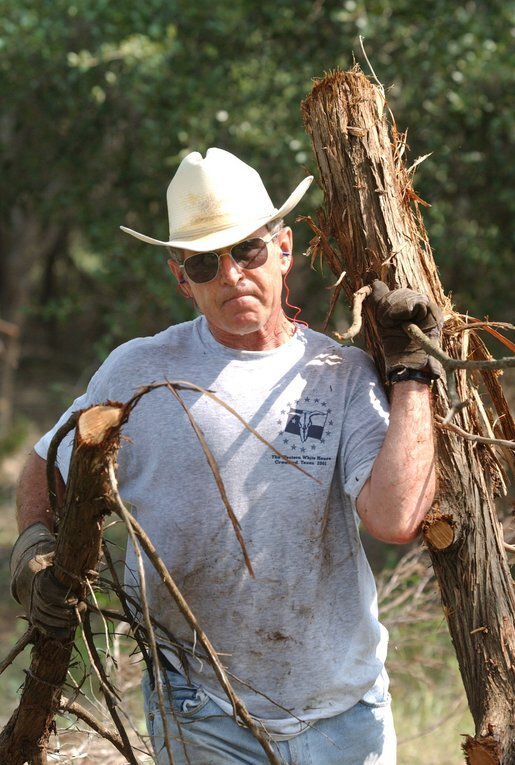
“ Twenty-five miles West of Waco, where a man believing he was Messiah burned with 79 followers, where the Bandidos bike gang warred with Cossacks, shooting 27 at a Twin Peaks restaurant, where the prairie spreads between Austin and Dallas hosting indigenous grass and quintillions of bluebonnets, where as a child I road-tripped with my father the sportswriter on highways snaking through hill country, where the artist who once started wars bought 1600 acres of creeks and sage and live oak— there, leather-gloved, the artist weeds and chainsaws and poisons the mesquite clogging native evergreens in a 100 degree cauldron, suited to the landscape, as was my father, as perhaps, with a squinty-eyed view, am I, and afterward the artist steps into his sun-light living room encased in glass, and raises a brush to touch the face of a man he once knew.
*
To catch the artist’s show in Dallas, I retrieve a ticket from a uniformed guard in a booth walloped by rain. He is drenched, slicker-less, but jovial and kind. He makes sure I know where I'm going. I’ve just moved back to Texas, I tell him, after eight years away in Japan and Iowa, so in a way I don’t. Gears in my body and mind are only beginning to latch onto landscape and voices and faces I grew up with and grind in ways they haven’t since I left. There’s a language of Texas, one I’m keen to re-learn now that my father died a few months ago, his life circumscribed by two rivers, which border the state. A man who resembled the artist in drawl, politics, and in that ineffableness that draws me to the artist’s work.
Inside, I follow a human gaggle, young, old, almost entirely white, into the cathedral-like chamber. Four stories above us are sky-lit windows that allow clouds and baby-blue to fill in the room, pushing at the boundaries of space between us.
I'm excepting an art museum, but the guards and walkie-talkied attendants are more proactive in querying my gaze and note-taking. As I stand before the watercolors, they ask why I came, who am I, what I want to find? I say, “I’m from Texas, and I just moved back” as if that explains something. By the look in their eyes, I translate that it does.
*
The artist’s home peaks above a hill of prairie grass forests, the walls’ limestone bricks dug from local queries, set at rustic, irregular angles. The house is dressed floor-to-ceiling in glass, surrounded by Indian paintbrushes and bluebonnets. The artist reseeded his land with native plants, hoping to restore the landscape to earth-tones, wildlife, and light. The ranch made the cover of Architectural Digest, and master naturalists lead photography trips here. It is perhaps his finest work.
During the eight years the artist was most famous, he made regular trips to his Texas home, staying up to five weeks away from the office. His escape, his grounding. On a typical day, the artist woke at 5:45 and brewed coffee. He let out his dogs to howl across the prairie. He carried a steaming cup to his wife. He then newspapered, ran four miles, and showered. He was briefed by the CIA in a communications bunker. Afterward, he muscled a gas-powered chainsaw to a secluded nook on his property and began clearing brush as the sun tilted overhead and his grass and flowers fanned in the distance. At the end of the day, he would fish, watch baseball, and, later, he would paint…”
Quisque iaculis facilisis lacinia. Mauris euismod pellentesque tellus sit amet mollis.